What will trust in the mobile world need to look like a decade from now?
In this edition of the Layers Bulletin we’re looking to the future. We’ll unpack what our latest EMVCo security approval for the Licel vTEE signals for the future of secure mobile services, and we’ll share our vision for digital identity trust in the next decade.
You’ll also find the latest DexProtector updates, plus a quick recap of the events we’ve sponsored and supported over the last month.
Welcome to the November 2025 edition of the Layers Bulletin.

What's new with Licel's solutions?
DexProtector
This month, we released DexProtector 15.0.9.88 This latest version introduces significant performance improvements for iOS, especially for app startup times, and a new UI protection feature for Android: virtual touch detection.
Bots, malware, and remote access tools interfere with apps without ever touching the device, instead triggering input events that can be hard to distinguish from real user interactions. These tools often combine with Accessibility Services, screen sharing, and root privileges not only to see the UI, but to control it, bypassing traditional security controls and anti-fraud measures.
That's why we've introduced new detections for virtual touch events. DexProtected apps can now block virtual input, terminate to stop further threats (such as screen capture through virtual displays), and report to Alice for further analysis and action.
This helps organizations to distinguish real user interactions from automated activity, and to secure the mobile channel more effectively against bot attacks, credential stuffing, scripted sign-ups, and remote access scam sessions where a fraudster takes over the user’s device.
Virtual touch detection is available to all DexProtector Enterprise customers. For more information about configuration, please contact our support team.
The Licel vTEE
The Licel vTEE has earned its second consecutive EMVCo security approval for the iOS platform under the Software-Based Mobile Payment (SBMP) TEE program.
EMVCo’s evaluation and approval confirms that the Licel vTEE continues to meet the very highest international standards for mobile payment security, empowering developers to build the next generation of compliant, trusted solutions from mobile payments through to digital identity.
The Licel vTEE is a trailblazer for a number of reasons, but one benefit worth highlighting is is the fact that it is hardware-agnostic. For years now, developers of payment wallets, digital ID solutions, and other high-security applications have been forced to build and maintain separate sets of security tools and solutions for Android, iOS, and now, emerging platforms like HarmonyOS. Because it’s hardware-agnostic, the Licel vTEE helps to make this current reality obsolete by providing a certified, universal, cross-platform layer for Trusted Applications.
The upshot of this is that developers get to write their most sensitive code - for cryptographic operations, key management, and biometric authentication - once, and then deploy it consistently and securely across all major mobile operating systems. It’s an innovation that dramatically simplifies development, streamlines compliance, and accelerates the launch of secure mobile services.
Alice Threat Intelligence
Alice Threat Intelligence continues to play a vital role in providing our clients with visibility about their mobile applications’ threat landscape and how it’s evolving over time. Its data stream empowers them to make much more nuanced, smarter decisions to improve their overall security posture.
Click below if you’d like to learn more about Alice and find out how its Trusted Signals are empowering SOC teams to act with confidence.




Attack trends
How Not to Lose Your Identity in 2035
Around a month ago at Droidcon London, Licel co-founder and CTO, Mikhail Dudarev, gave a talk where he explored what digital identity will need to withstand by 2035. Not just for humans, but also the AI agents that will increasingly act on our behalf.
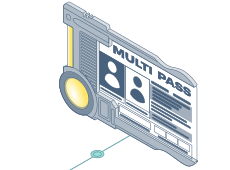
He used the Multi Pass ID from the cult sci-fi classic, The Fifth Element, as a surprisingly modern lens on identity: many of its fields feel prophetic when you compare them to today’s Digital ID schemes. From there, he laid out what the foundations of trust will need to be between now and 2035, in a world full of increasingly complex and sophisticated mobile fraud.
The article below builds on that talk and expands our vision for Digital ID security even further.
It was great to meet you in London and Bangkok
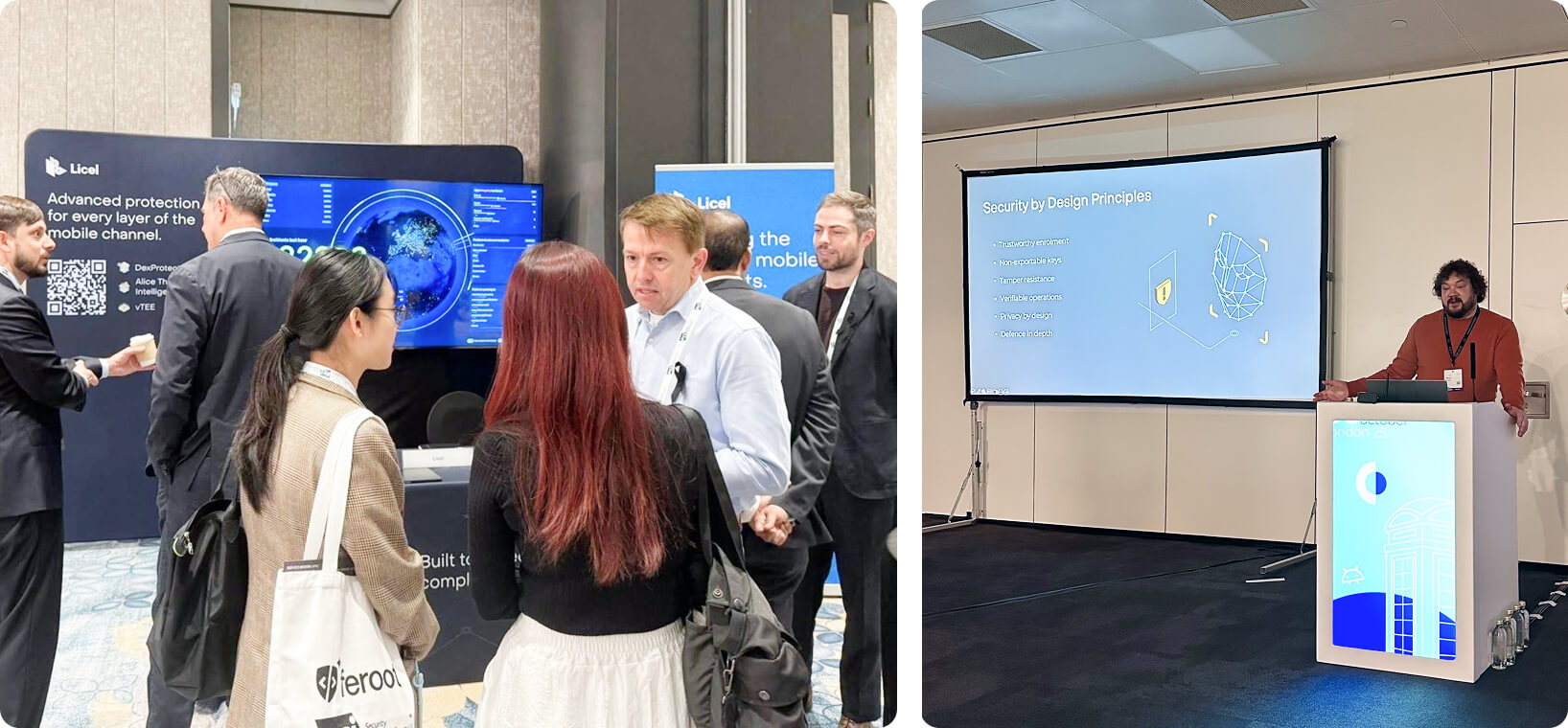
After our third consecutive run as gold sponsors of Droidcon London, we headed to Bangkok to support the PCI SSC Asia Pacific Community Forum.
Droidcon London is a special event for us. As a developer-led company, it’s a nice feeling to meet so many super-talented developers who are helping to shape the future of mobile apps. We enjoyed speaking with some of you there and finding out what matters most to you when it comes to mobile security.
It was also a great pleasure to talk with so many people in Bangkok who, like us, are passionate about securing mobile payments around the world. Not just against existing threats, but against those we can see forming on the horizon. We firmly believe that by protecting the entire mobile channel against these threats, you go beyond compliance. You get to build deep levels of trust with your end users. The conversations we had in Bangkok made it clear that we’re not alone in thinking this way.
Thanks for reading this edition of the Layers Bulletin. We'll be back next month with more product improvement updates and threat intelligence insights.